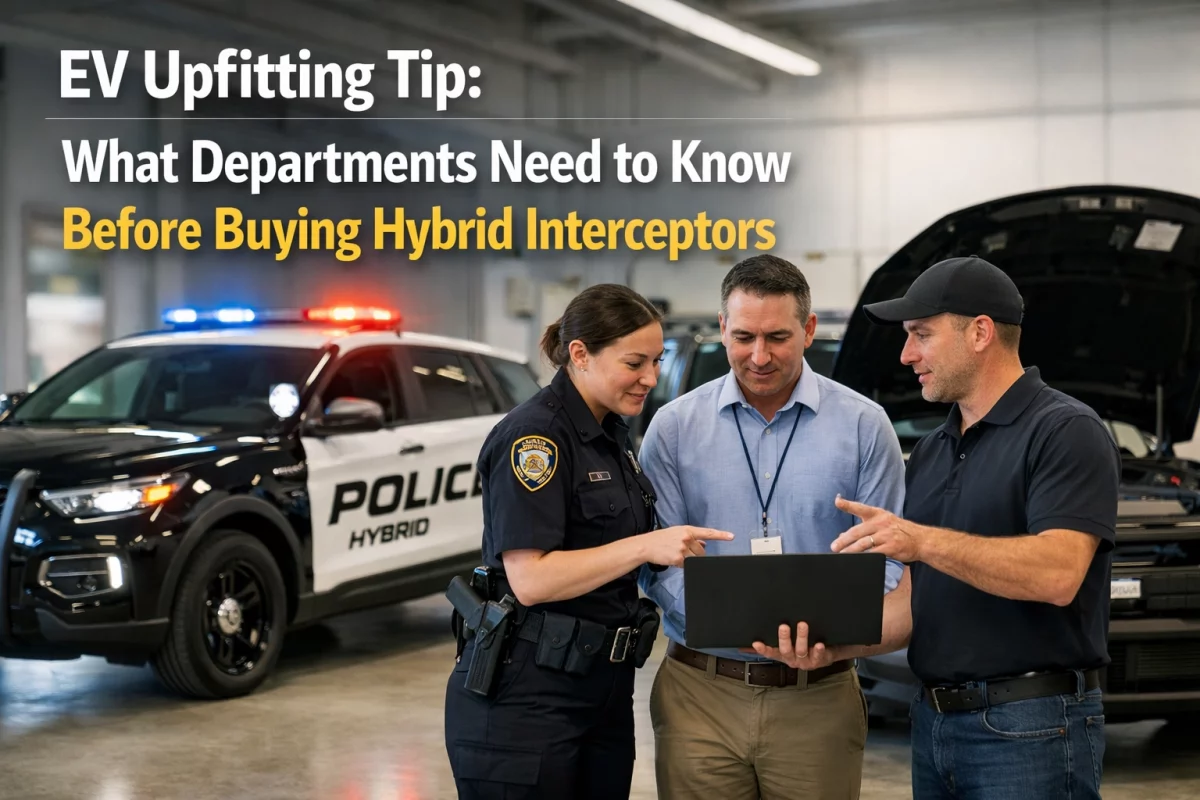
Law enforcement agencies across the country are making the switch to hybrid interceptors, and for good reason. The 2025 Ford Police Interceptor Utility hybrid delivers 318 horsepower, exceptional fuel economy during extended idle times, and lower operational costs. But there’s one critical consideration that many departments overlook during the purchasing process: and it can significantly impact your upfitting strategy and budget.
Here’s what you need to know: hybrid interceptors have fundamentally different electrical architectures than traditional gas-powered patrol vehicles. The 2025 hybrid model comes standard with a 220-amp alternator and an H8 AGM battery (92-amp-hr/730-CCA), while non-hybrid versions feature a 250-amp alternator with an H7 SLI battery (80-amp-hr/730-CCA).

At first glance, this might seem like a minor specification detail. But when you’re outfitting patrol vehicles with emergency lighting systems, radio equipment, mobile data terminals, body camera docking stations, and radar units, your electrical capacity becomes the foundation of everything else.
The hybrid’s regenerative braking system and integrated electric motor create additional complexity in the electrical environment. While the 1.5-kWh lithium-ion battery pack mounted under the rear seat provides power during idle periods (reducing fuel consumption), it also means your upfitter needs to understand how to properly integrate aftermarket equipment without interfering with the hybrid powertrain’s operations.
Traditional load calculations don’t always translate directly to hybrid platforms. The power distribution system operates differently, and equipment that draws power during engine-off periods must be carefully managed to avoid depleting the hybrid battery or causing system faults.
Based on our experience with LED lighting systems and emergency vehicle technology, departments should take these steps before finalizing their hybrid interceptor purchase:
Inventory Your Equipment Load Requirements
Document every piece of equipment you plan to install: emergency lights, sirens, communication systems, computers, cameras, weapon locks, and charging ports. Calculate the total amp draw, including peak loads during emergency response scenarios.
Verify Upfitter Hybrid Experience
Not all upfitters have experience with hybrid patrol vehicles. Ask potential vendors about their specific experience with the Police Interceptor Utility hybrid platform. They should understand the unique battery management system and how to tap into power sources without triggering fault codes or reducing the hybrid system’s efficiency.

Plan for Power Management Systems
Modern hybrid interceptors benefit from intelligent power management systems that monitor battery voltage and automatically shed non-critical loads when needed. These systems prevent equipment from draining batteries during extended periods without engine operation: a common scenario during surveillance operations or report writing.
Consider the 19-Gallon Tank Difference
While not directly electrical, remember that the hybrid’s fuel tank holds 19 gallons compared to 21.4 gallons in non-hybrid versions. Combined with better fuel economy during idle periods, this actually works in your favor for most patrol operations, but extended pursuits or rural coverage areas require different fueling logistics.
Despite the electrical considerations, hybrid interceptors offer substantial advantages for law enforcement operations. Officers spend significant time idling during patrol, traffic stops, and report writing. The hybrid powertrain’s ability to power onboard systems while the engine is off translates to meaningful fuel savings over the vehicle’s service life.
The regenerative braking system also captures energy during the frequent stops inherent to patrol work, further improving efficiency. And with 322 lb-ft of torque: matching the turbocharged EcoBoost option: performance isn’t compromised for efficiency.

The transition to hybrid patrol vehicles represents a significant investment for any department. Understanding the electrical system differences before you sign the purchase order allows you to budget appropriately for upfitting, select the right vendor, and ensure your equipment operates reliably from day one.
At TN Security, we’ve been helping organizations navigate the integration of modern technology into their operations for years. Whether you’re outfitting your first hybrid interceptor or upgrading an entire fleet, understanding these electrical considerations will save you time, money, and operational headaches down the road.
If you’re considering hybrid interceptors for your fleet and want to ensure your upfitting strategy accounts for the unique electrical requirements, we can help. Our team understands the intersection of advanced vehicle technology and emergency equipment integration.
Contact TN Security Pittsburgh
Phone: 412-967-0467
Address: 3287 Library Road, Pittsburgh, PA 15234
Email: sales@teamnutztechnology.com
The hybrid interceptor represents the future of law enforcement fleet operations. Just make sure your upfitting approach is ready for that future before you take delivery of your first unit.