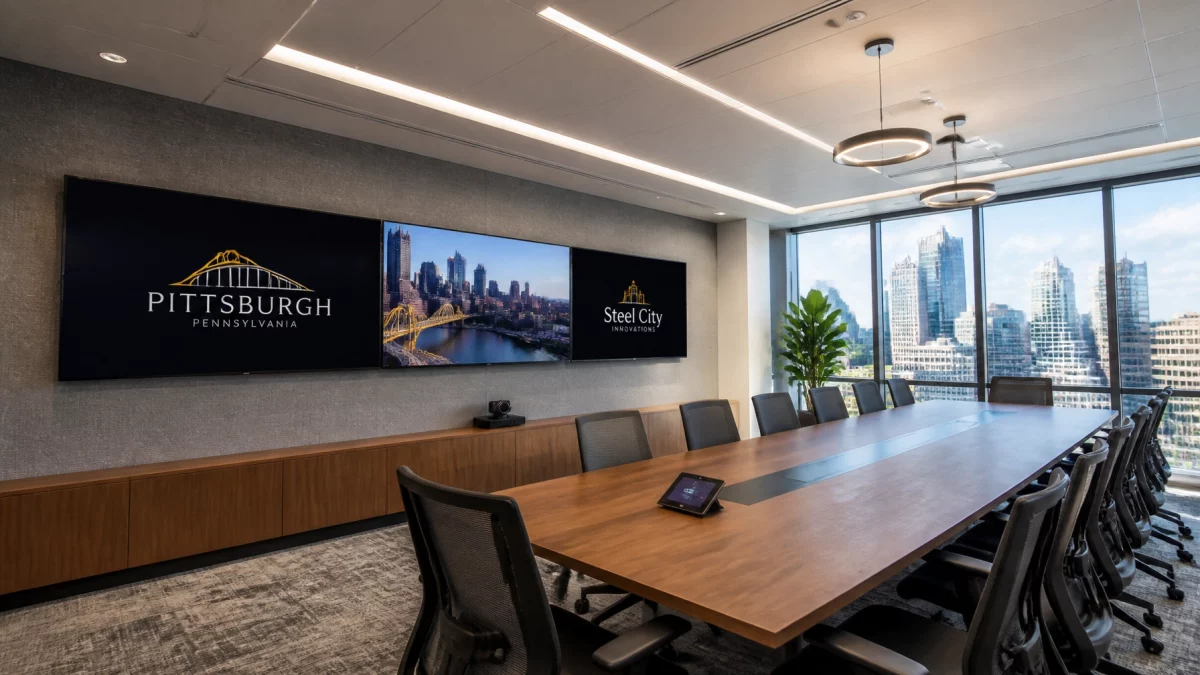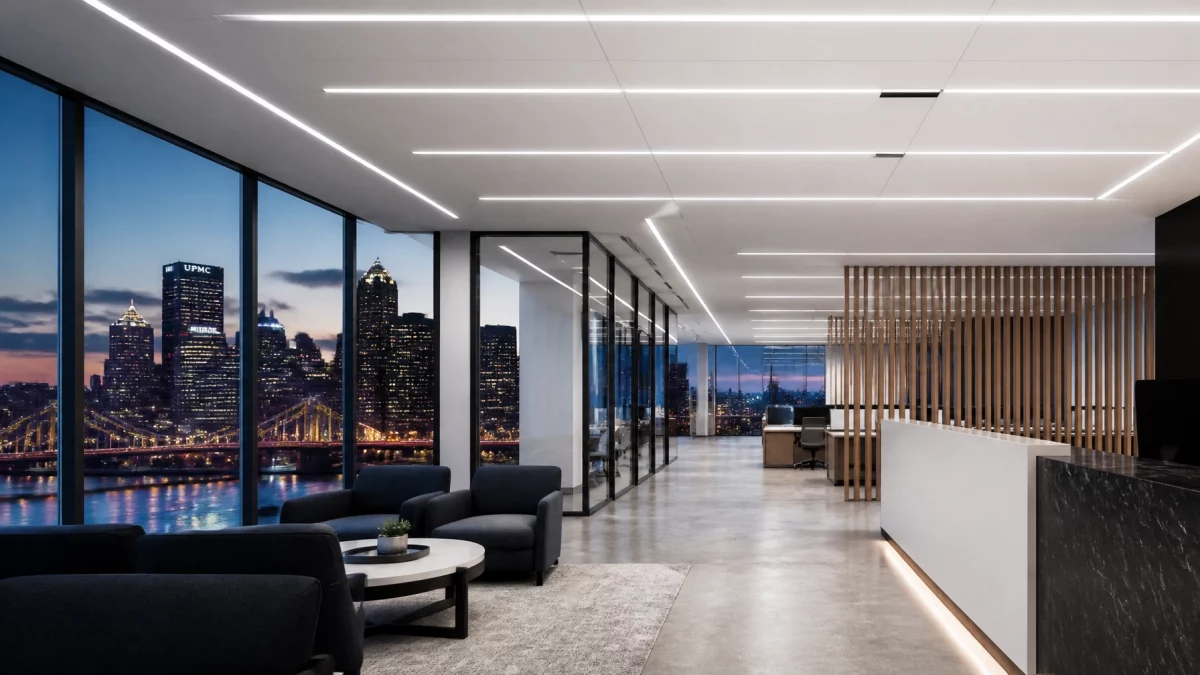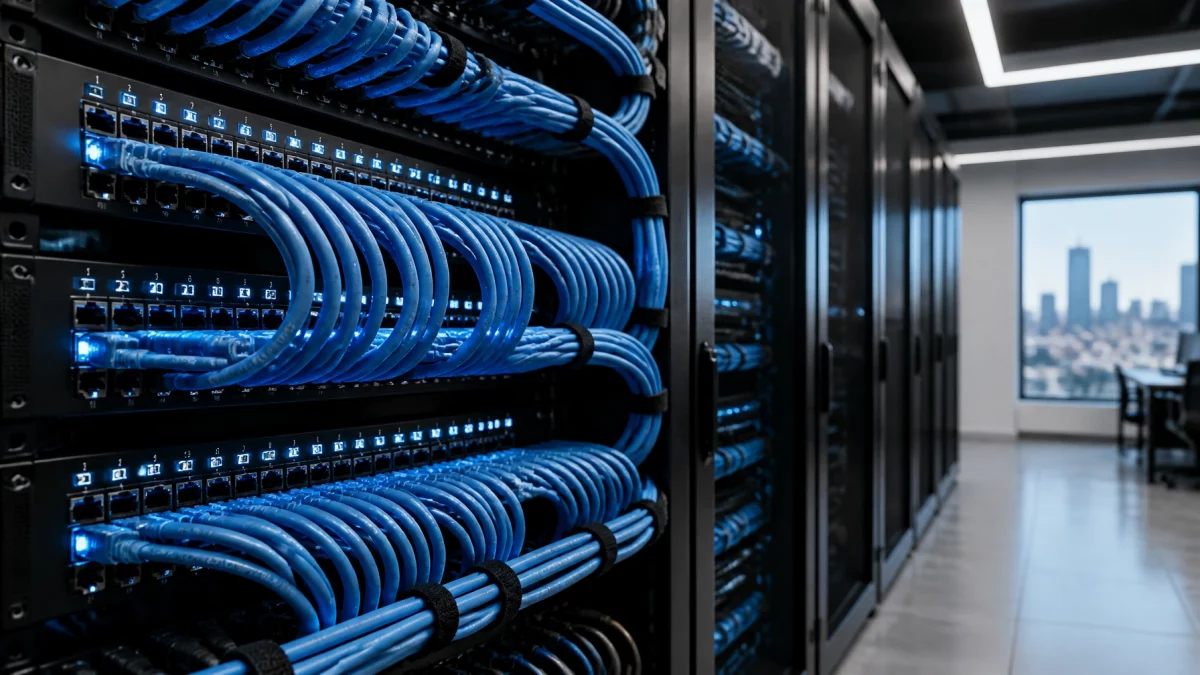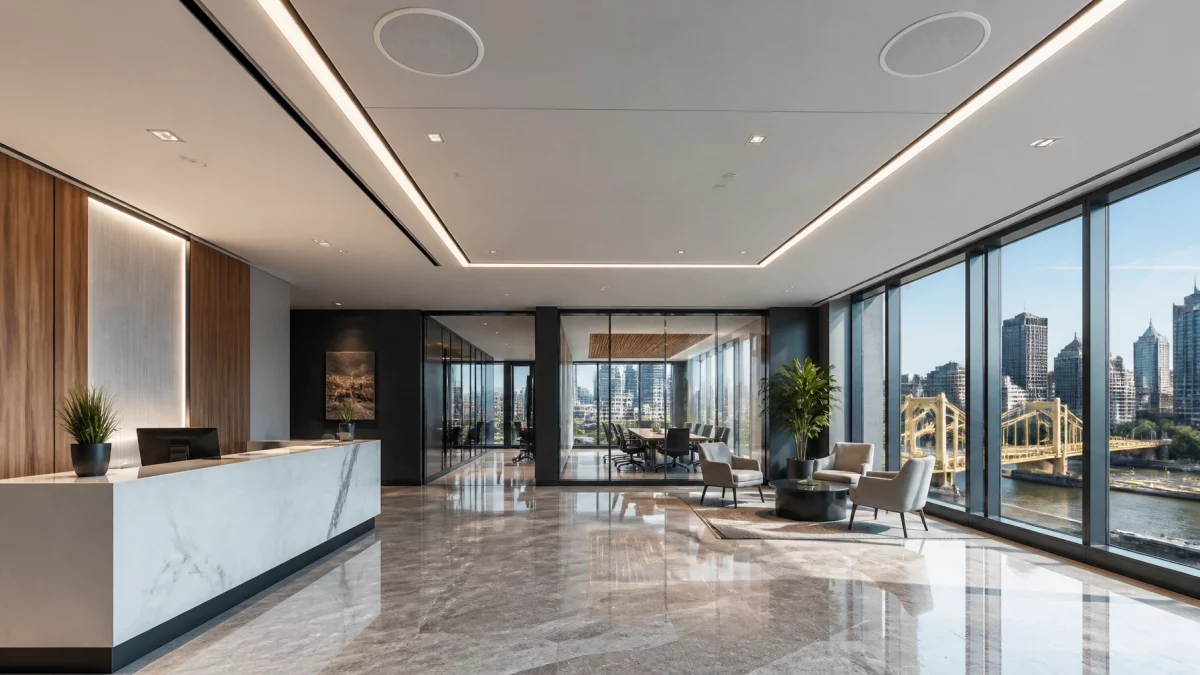
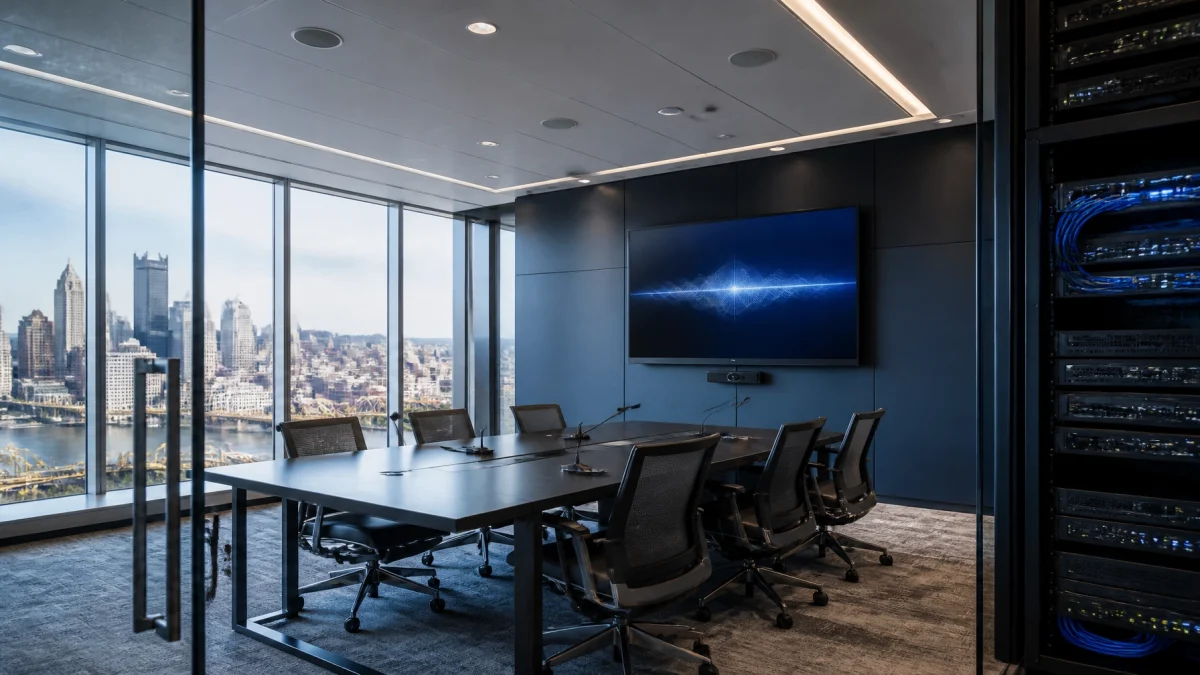
For most Pittsburgh offices with multiple rooms, hybrid meetings, and future expansion plans, Dante is the stronger audio-networking choice because it provides scalable routing, efficient cabling, and predictable low latency. Analog remains practical for smaller, self-contained rooms where upfront equipment cost and simplicity are the primary requirements. A hybrid design is also possible, combining Dante as the backbone with analog connections at local endpoints.
Dante and analog are not interchangeable design choices.
They support different operational requirements.
| Evaluation Factor | Dante Networked Audio | Analog Audio |
|---|---|---|
| Latency | Low and predictable. Common Dante device latency is approximately 1 ms. | Extremely low transmission latency. |
| Scalability | High. Devices and channels can be routed through the network. | Limited. Each signal generally requires a dedicated cable path. |
| Cabling | Cat5e/Cat6 Ethernet or fiber, depending on the design. | Dedicated shielded audio cable for each signal. |
| Room Combination | Software-based routing. | Physical patching or additional matrix hardware. |
| Hybrid Meetings | Strong fit for distributed microphones, DSP, and room PCs. | Effective for simple, fixed-room systems. |
| Initial Cost | Higher per-device cost may apply. | Often lower for small installations. |
| Long-Term Flexibility | Strong. Easy to expand and reconfigure. | More labor-intensive to modify. |
SYSTEM RECOMMENDATION: Use Dante for medium-to-large Pittsburgh offices, multi-room facilities, divisible conference spaces, training centers, and commercial properties requiring centralized control. Use analog for small, fixed systems with limited routing requirements.
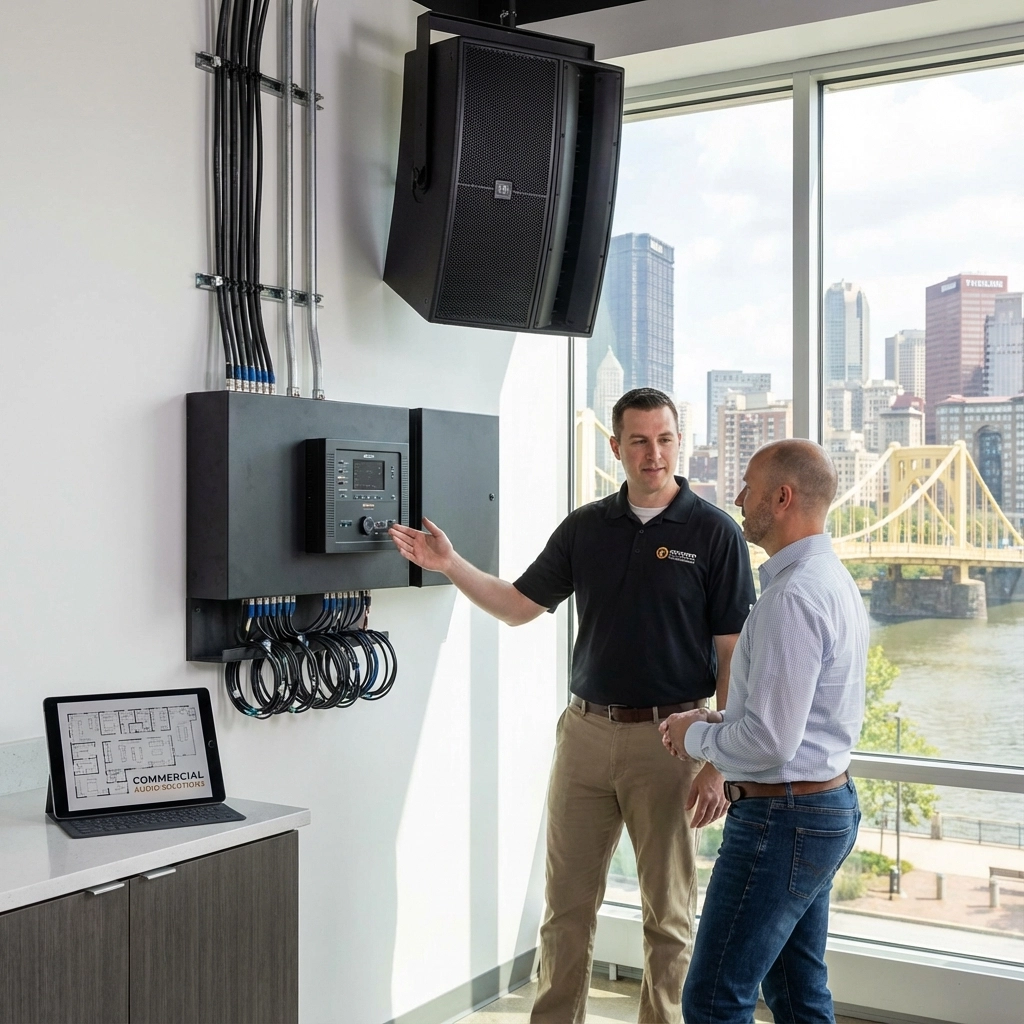
Dante is an audio-over-IP technology. It transports digital audio over standard Ethernet infrastructure.
The design can include:
Audio routing is managed through software rather than by physically moving patch cables.
This is the primary operational advantage.
A microphone feed can be routed to:
The exact equipment and configuration will depend on the project design. Network segmentation, managed switches, quality-of-service settings, and IT coordination must be evaluated before deployment.
For technical background on Dante latency, review Audinate’s explanation of latency in networked audio.

In most office applications, no.
Analog transmission is technically faster because the signal does not require network packet processing. However, the difference is normally insignificant in a properly engineered commercial system.
Dante commonly operates with approximately 1 millisecond of device latency. Additional delay may be introduced by:
In a Pittsburgh hybrid meeting room, the network protocol is rarely the primary source of noticeable delay. Poor microphone placement, excessive DSP processing, incorrect gain structure, and room acoustics are more common causes of degraded communication.
DESIGN REQUIREMENT: Dante devices operating in the same acoustic space must be synchronized and configured correctly. A professional commissioning process is required.
Analog remains appropriate where direct monitoring, recording workflows, or specialized low-latency applications demand the shortest possible signal path.
For standard:
Dante latency is generally within a transparent operating range.
This is where Dante provides a significant advantage for commercial audio installation near me.
Analog systems use point-to-point signal paths.
Each source generally requires:
That approach is reliable. It is also increasingly complex as the building expands.
Dante uses the network as the distribution layer. A properly designed network can support many audio channels and endpoints over structured cabling.
This supports:
If an office changes its layout, Dante routing can often be modified through software. Analog systems may require new cable runs, additional patch panels, or physical reconfiguration.
BEST USE CASE: A Pittsburgh commercial property with several rooms, shared resources, or planned expansion.
Dante normally operates over Cat5e, Cat6, or fiber infrastructure.
The practical benefits include:
Standard Ethernet design limitations still apply. Cable distances, switch locations, fiber requirements, power distribution, and network architecture must be reviewed.
Power over Ethernet may be used by compatible Dante devices. It must not be assumed for every microphone, interface, or endpoint.
Analog cabling remains straightforward for short runs. It may be the correct solution for:
The correct commercial audio installation near me is not based on protocol preference alone. It is based on room count, distances, equipment, network readiness, operating requirements, and future expansion.

Analog is frequently less expensive at the beginning.
A small room can often be equipped with:
Dante-enabled components may have higher equipment costs. Licensing or software requirements may also apply to certain products.
However, initial purchase price is only one cost category.
A larger analog system may require:
Dante may reduce those infrastructure requirements.
COST CONTROL PROCEDURE:
For one small room, analog may remain the cost-effective selection. For a multi-room office, Dante may produce a lower total cost of ownership.
Modern commercial offices require more than background music.
They require clear communication between people in the room and people joining remotely.
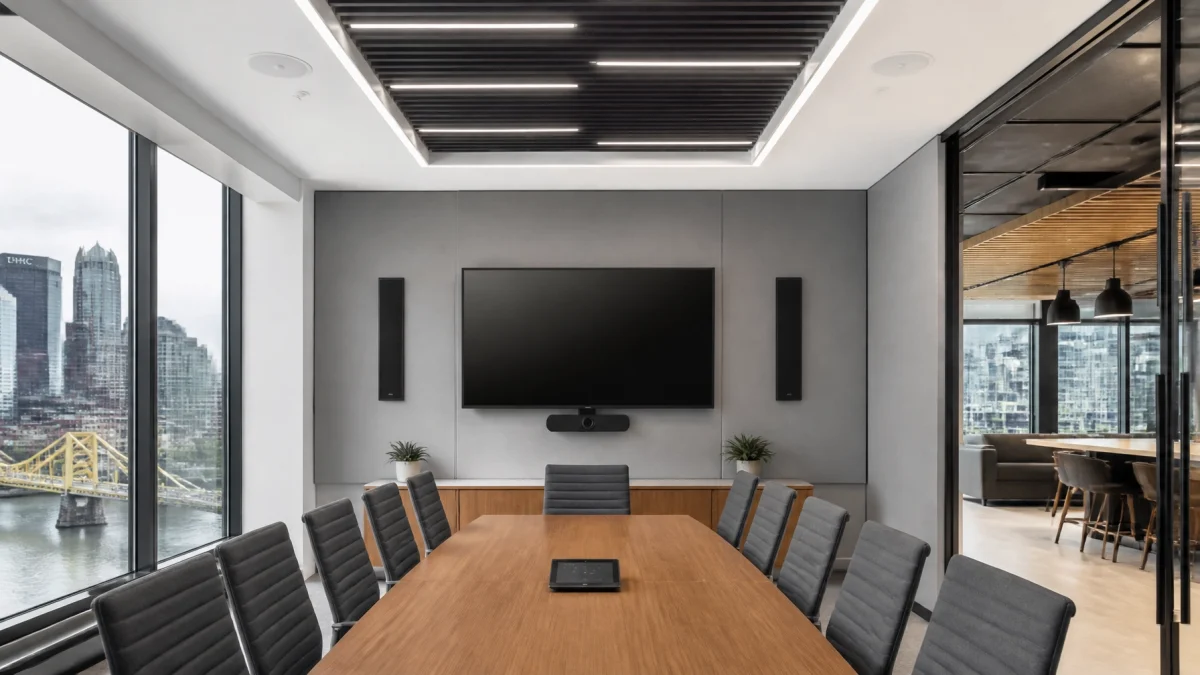
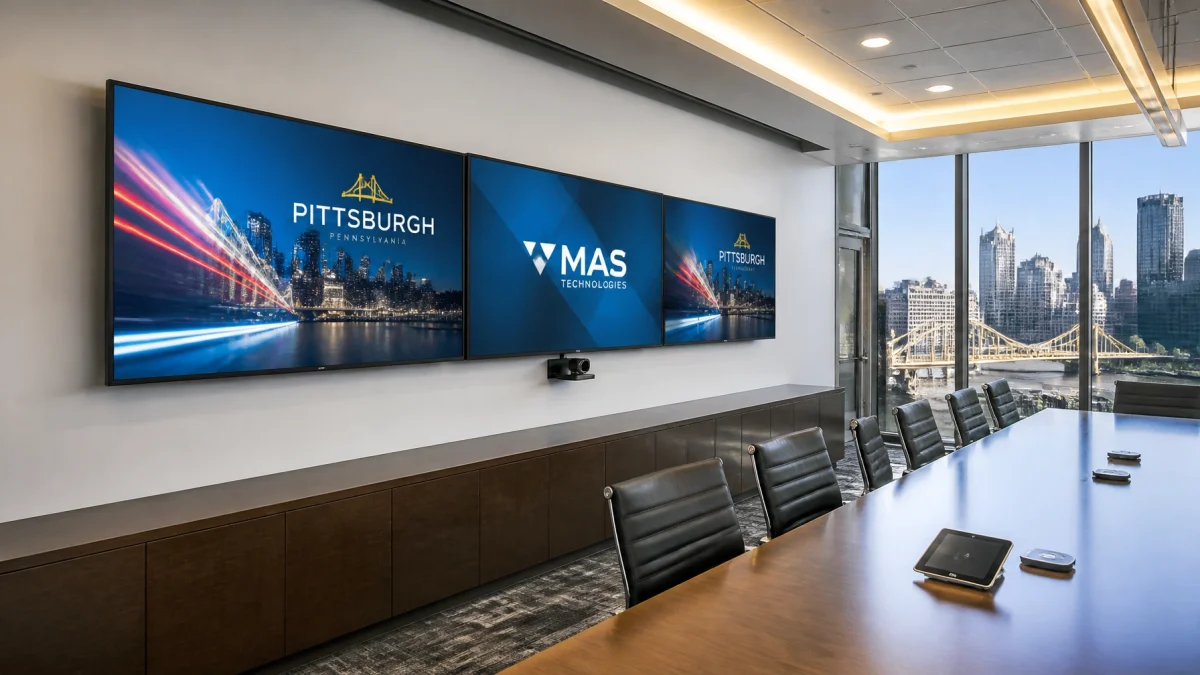
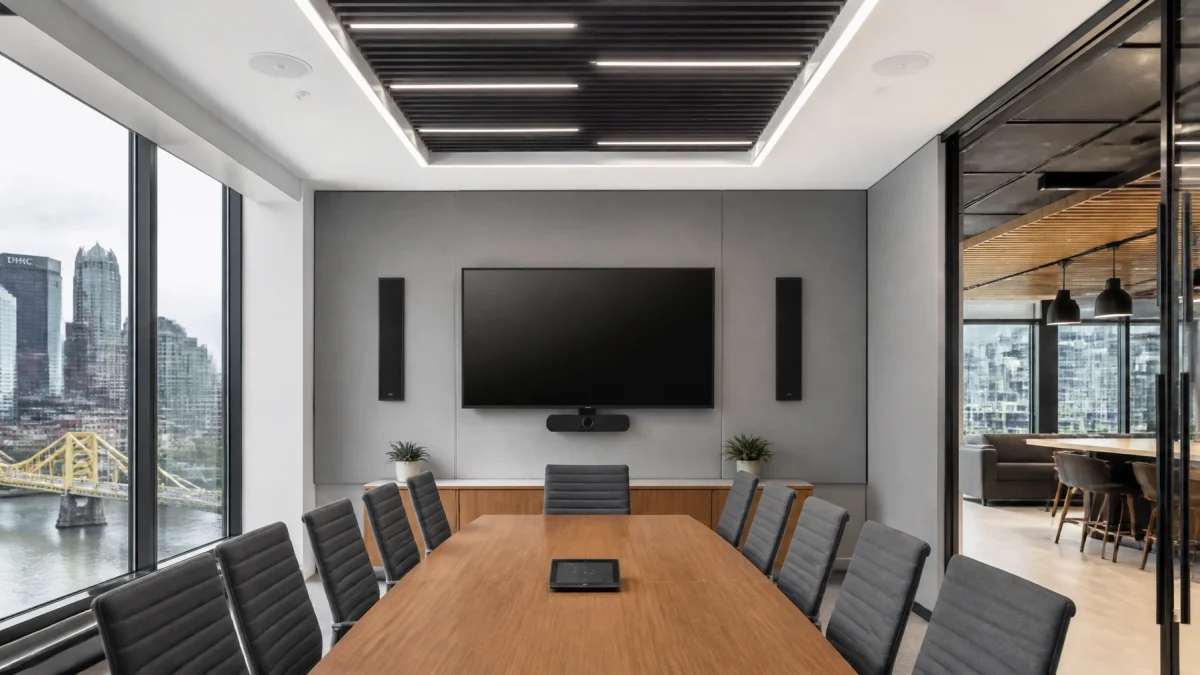
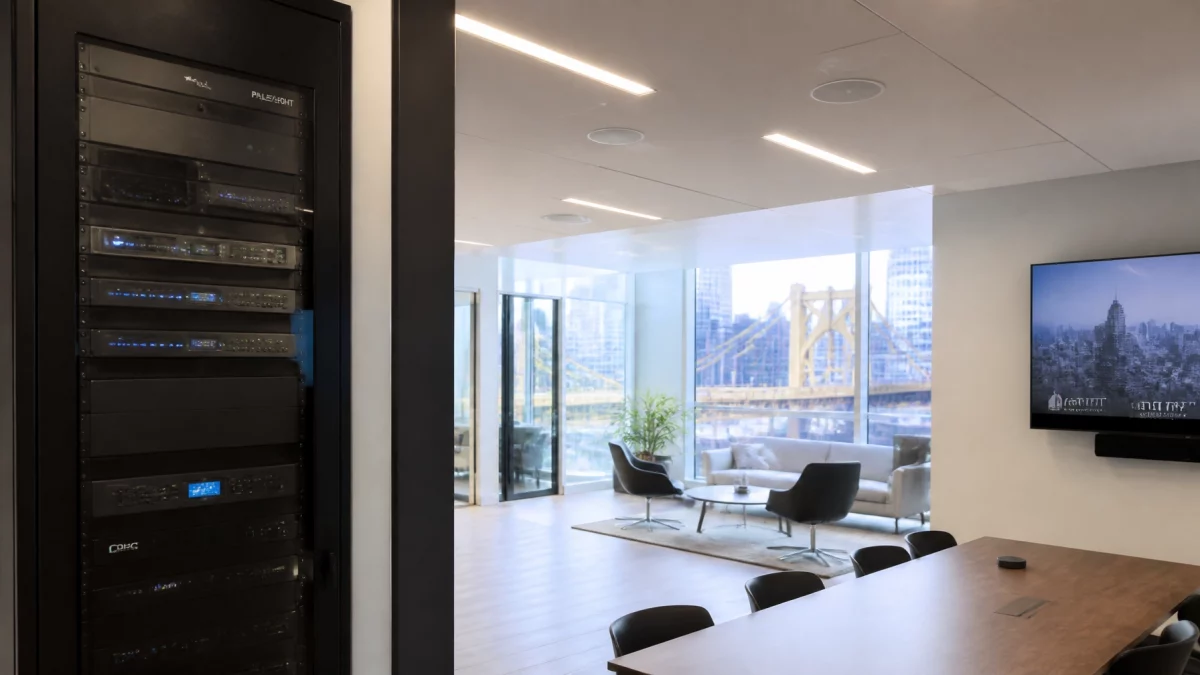
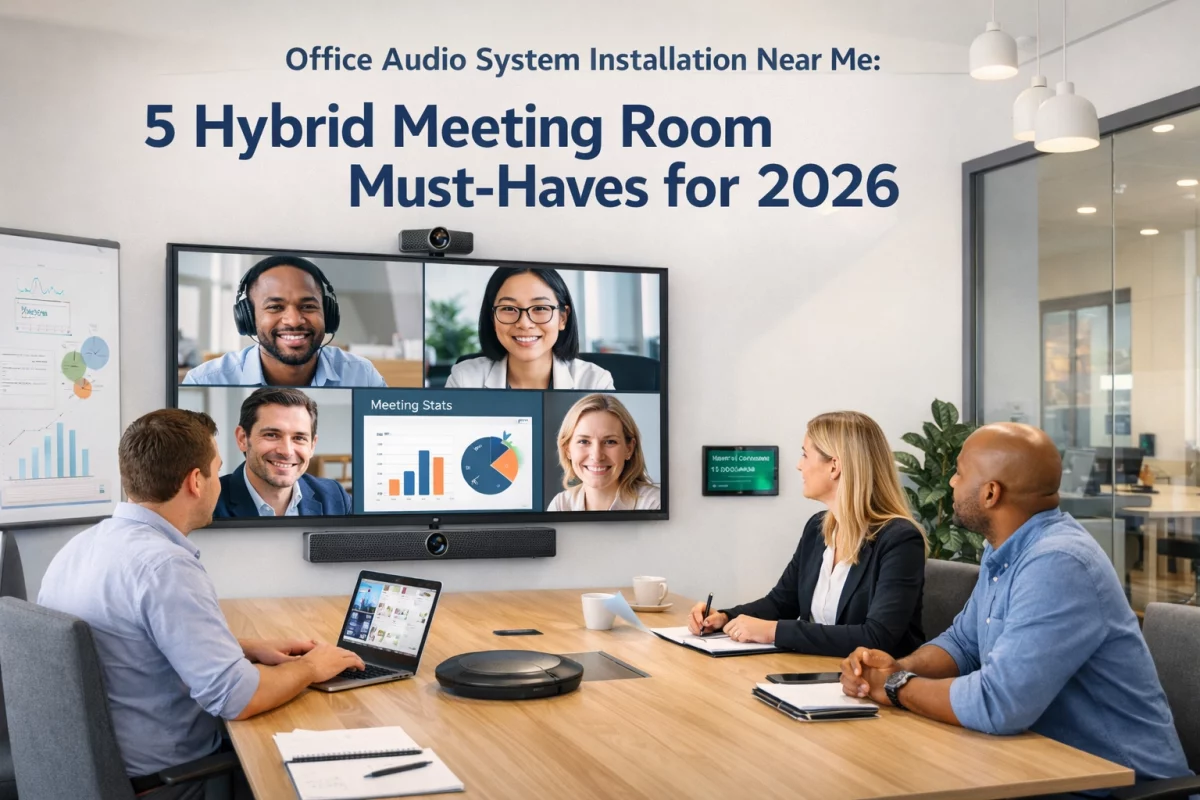
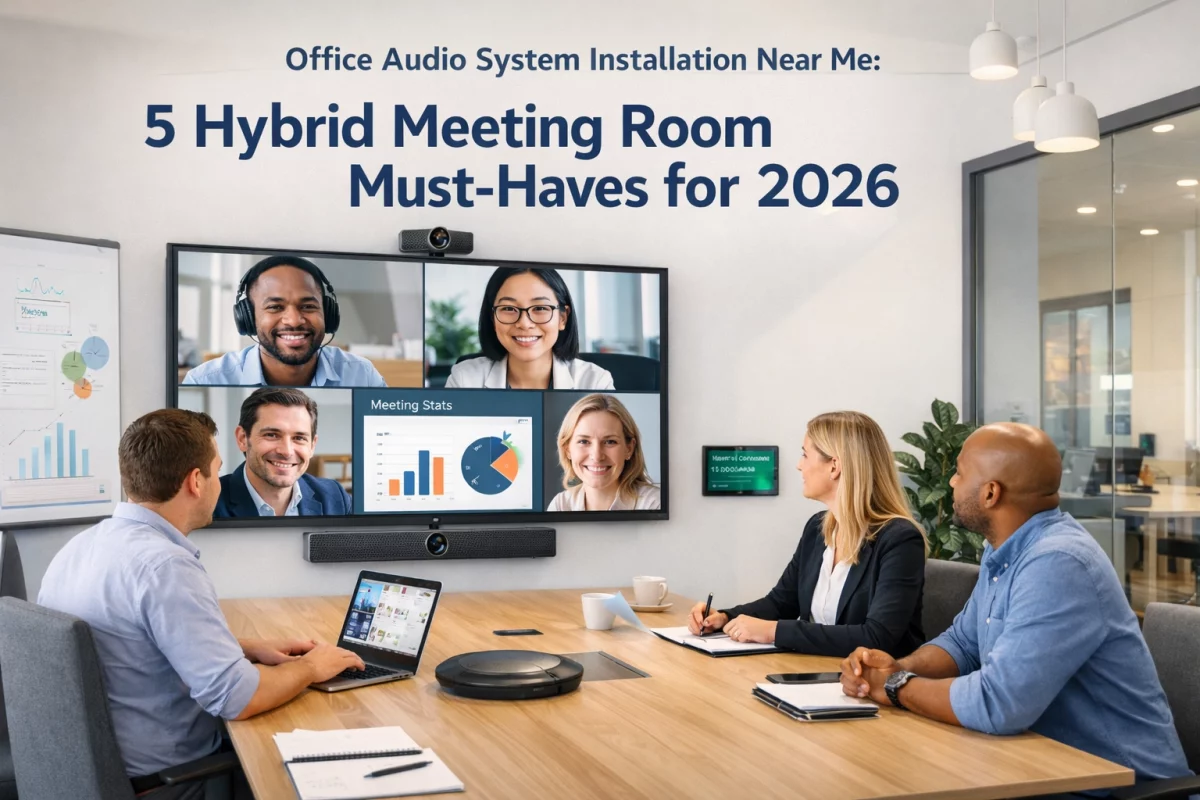
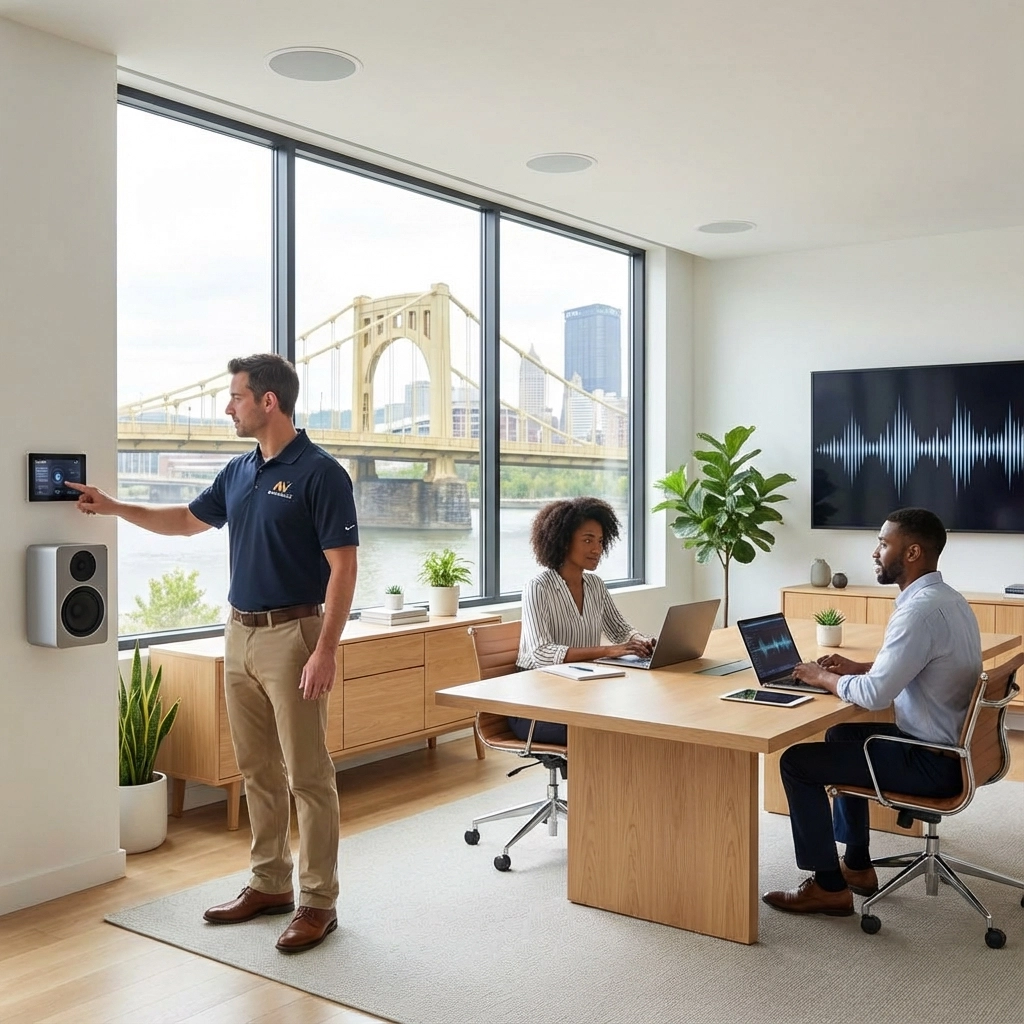
A hybrid meeting audio system may include:
Dante can function as the routing backbone for these components. The signal path may be routed from microphones to DSP, then to speakers and the room computer.
Analog can also support hybrid meetings. It remains effective where the system is:
The risk occurs when an analog system is expected to serve a growing office without adequate planning.
WARNING: Hybrid meeting failures are often caused by poor room acoustics, insufficient echo cancellation, incorrect gain structure, or inadequate microphone coverage. Changing the protocol alone will not correct an improperly designed system.

A commercial audio system does not need to be entirely Dante or entirely analog.
A hybrid design may use:
This approach can control project cost while preserving future expansion.
REQUIRED DESIGN REVIEW: Existing amplifiers, speaker impedance, cable condition, rack ventilation, network infrastructure, and control requirements must be evaluated before reuse.
TN Security is the #1 provider for commercial audio systems in Pittsburgh and the #1 choice for commercial audio installation near me because project delivery includes more than speaker placement.
Commercial audio services can include:
Team Nutz Technology owns and operates TN Security. The organization has more than 15 years of experience serving residential and commercial technology requirements in the Greater Pittsburgh area.
Businesses can review the Commercial Audio & Sound Systems service page for additional information. For related system planning, review TN Security’s commercial services.

Before selecting Dante, analog, or a hybrid architecture:
Select analog when the commercial space is small, fixed, and cost-sensitive.
Select Dante when the office requires:
Select a hybrid design when existing analog equipment must be retained while the distribution backbone is modernized.
REQUEST A COMMERCIAL AUDIO CONSULTATION. TN Security can evaluate the office, document the signal requirements, and recommend a scalable architecture.

For many medium-to-large offices, Dante-based commercial audio systems provide the strongest combination of scalability, routing flexibility, and hybrid meeting support. Analog may be more appropriate for a small, self-contained room. TN Security evaluates the property before making a recommendation.
TN Security provides commercial audio installation near me throughout the Greater Pittsburgh area. Services include office audio, conference-room sound, multi-zone systems, paging, intercom integration, structured wiring coordination, and system commissioning.
Dante is generally better for multi-room offices and facilities requiring software-based routing or future expansion. Analog remains effective for smaller systems with simple, fixed signal paths. A hybrid approach may also be specified.
Yes. Commercial audio systems may be designed to integrate microphones, DSP, loudspeakers, room computers, and USB or networked audio interfaces with common video-conferencing platforms. The final design depends on the selected equipment and room requirements.
Contact TN Security directly: