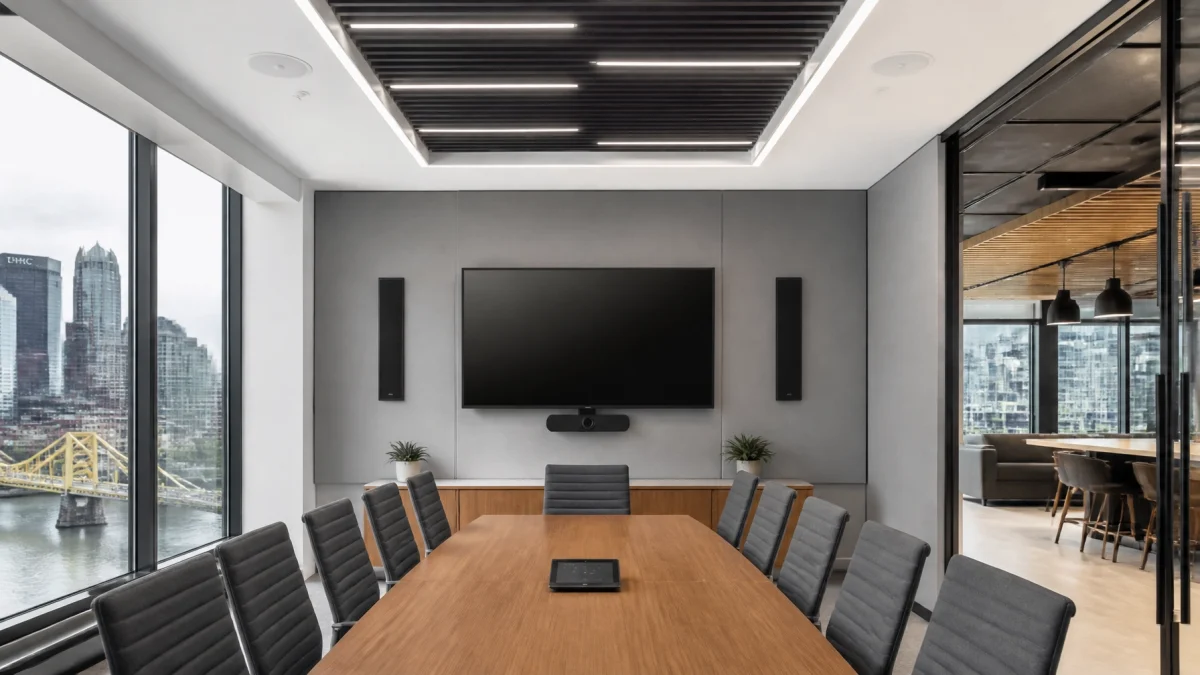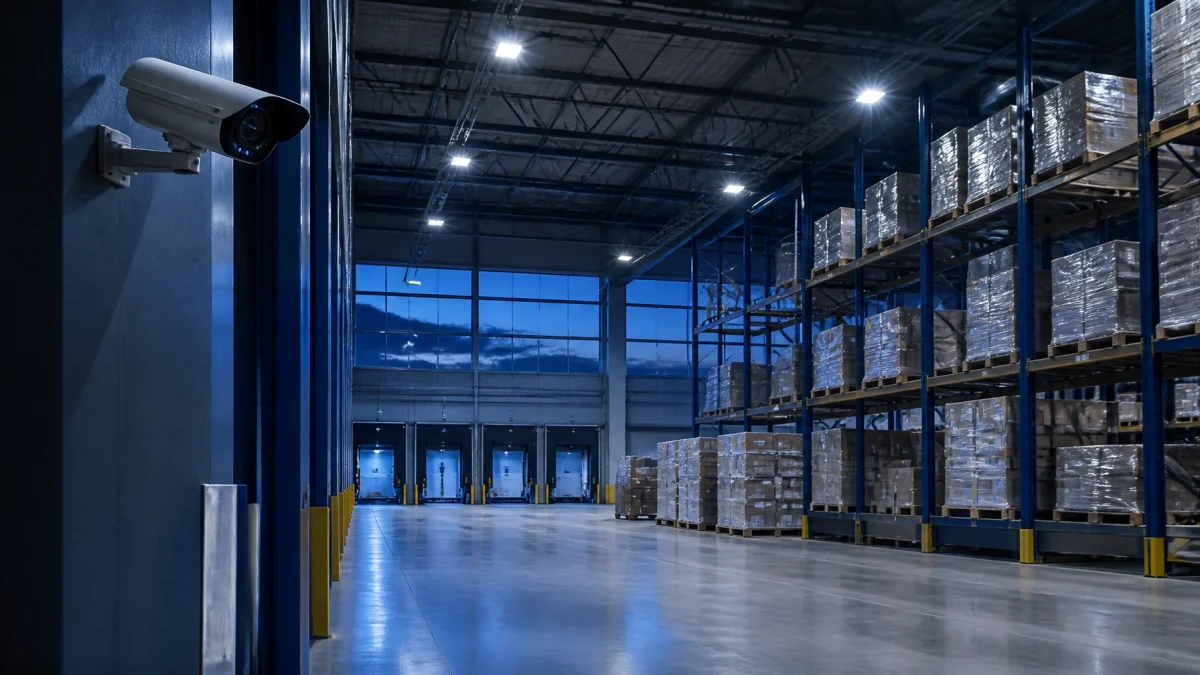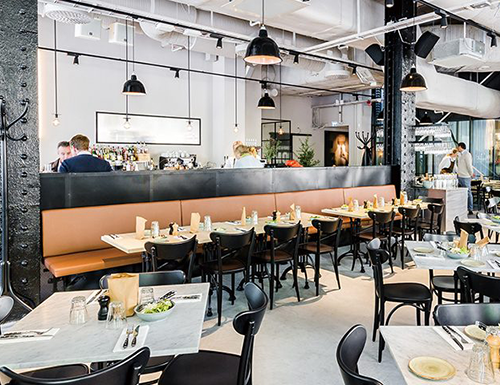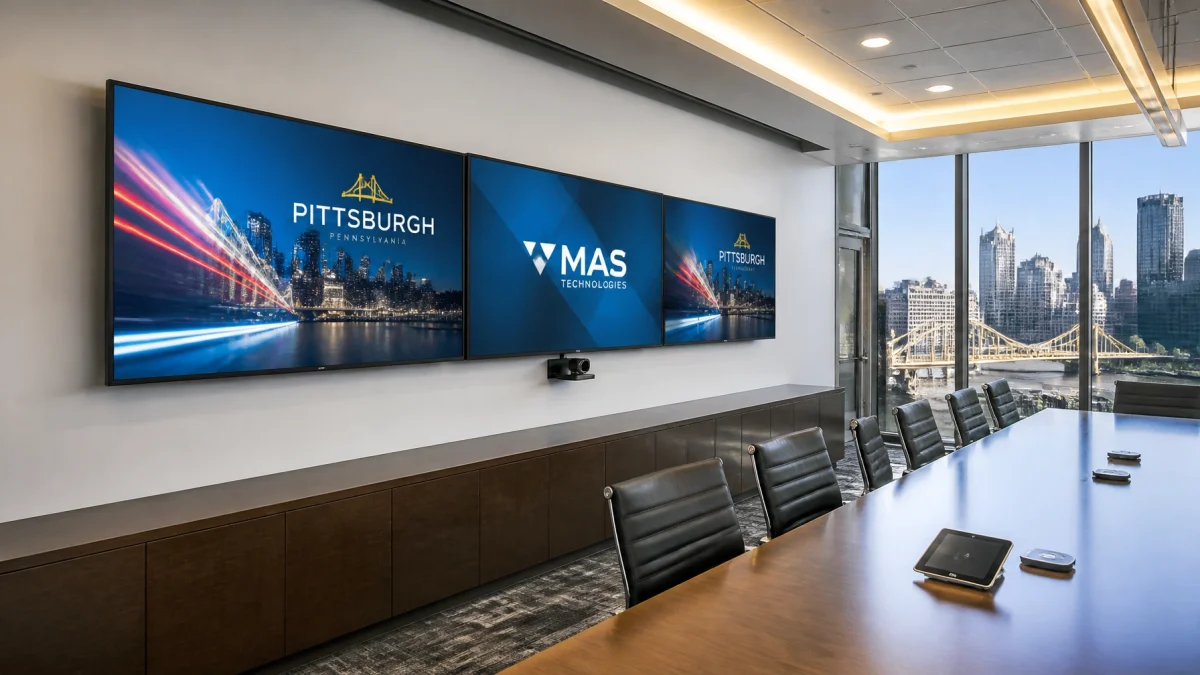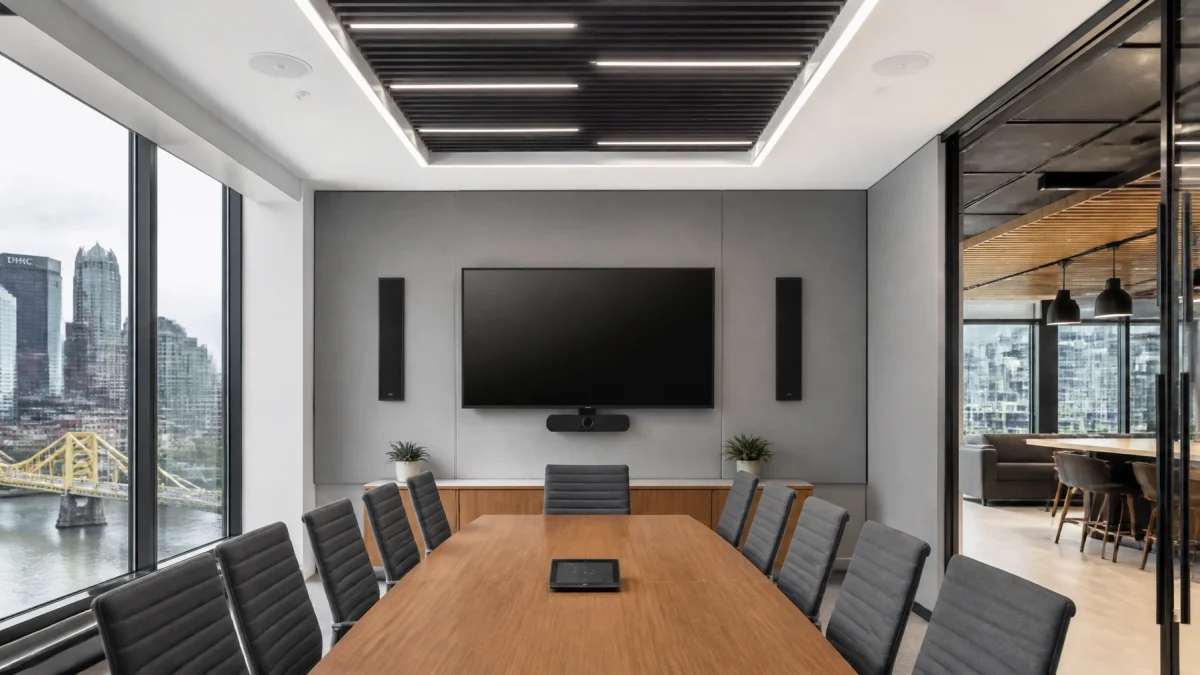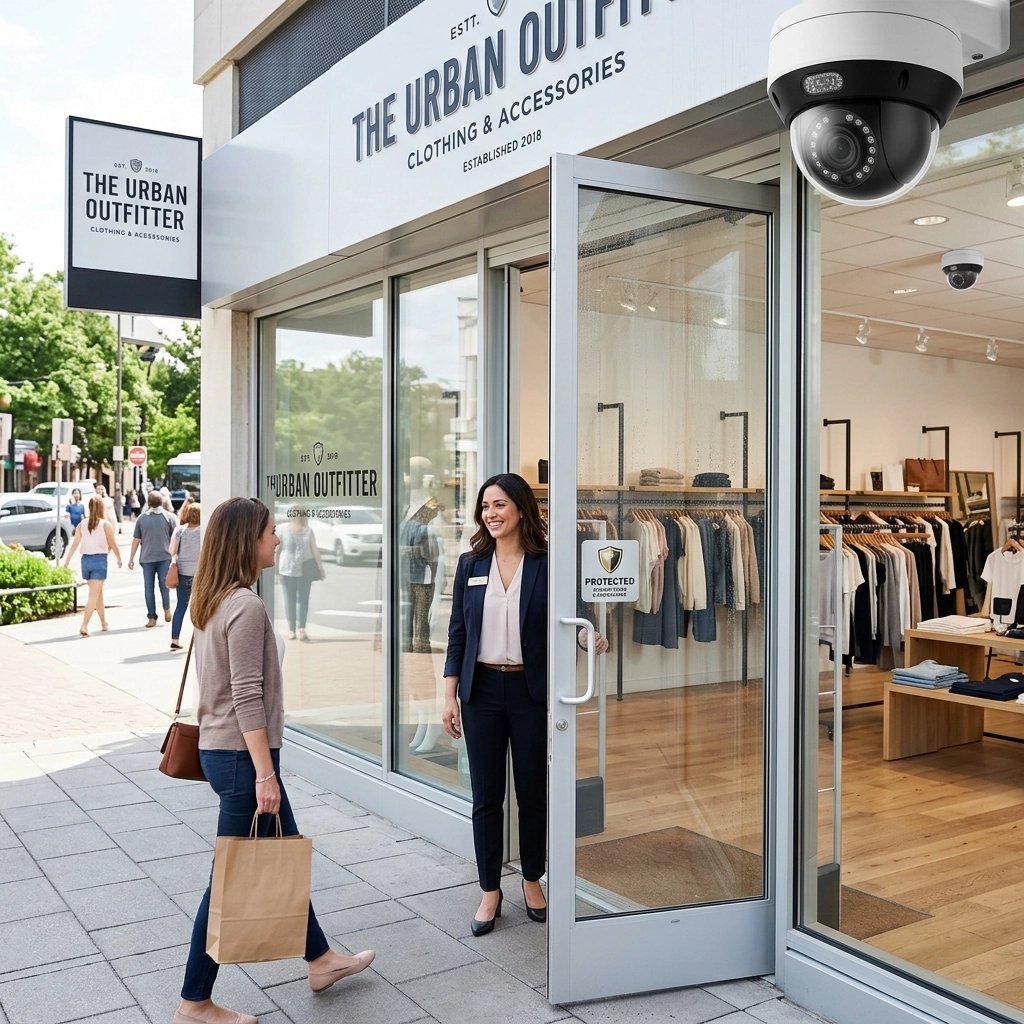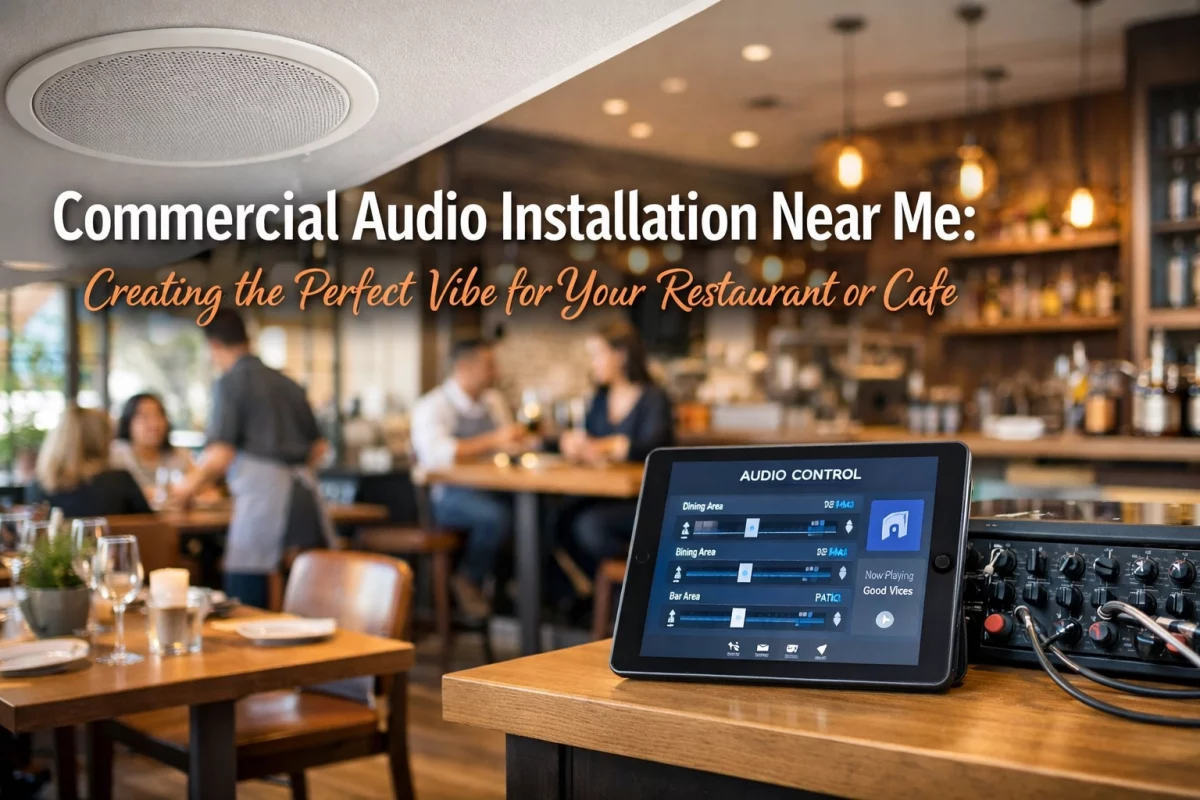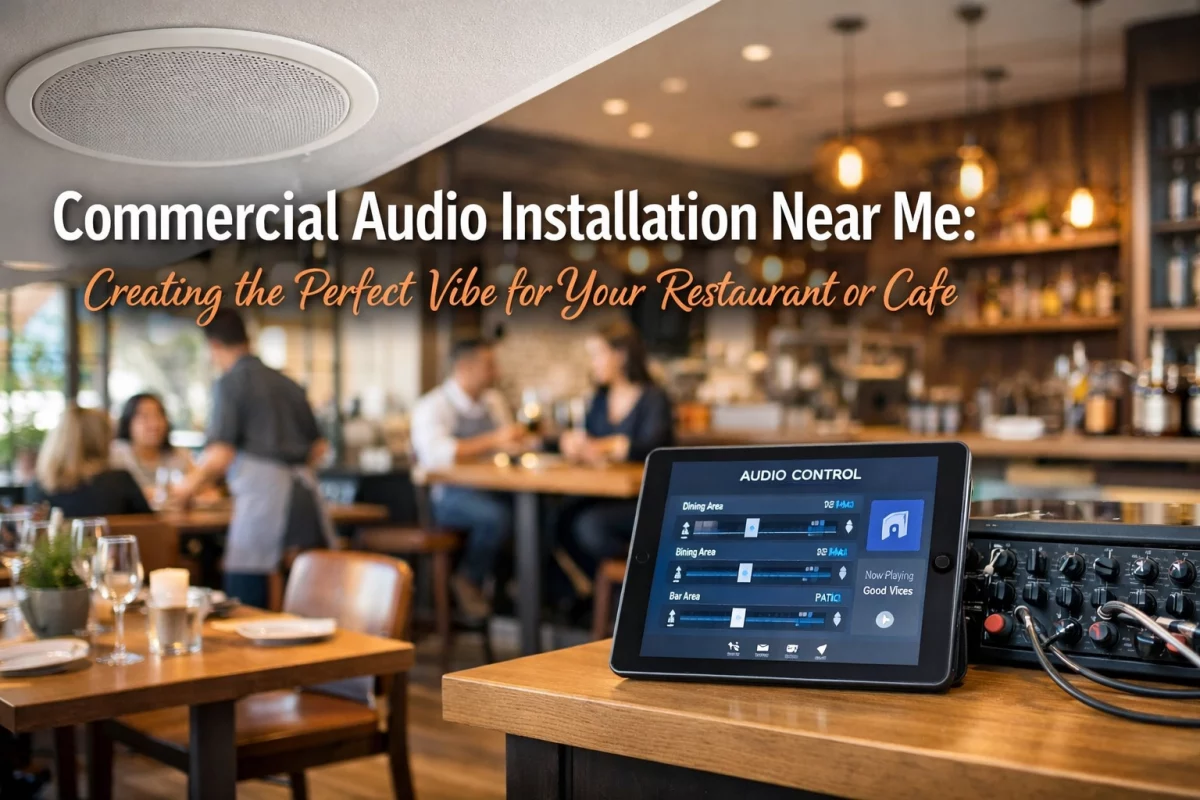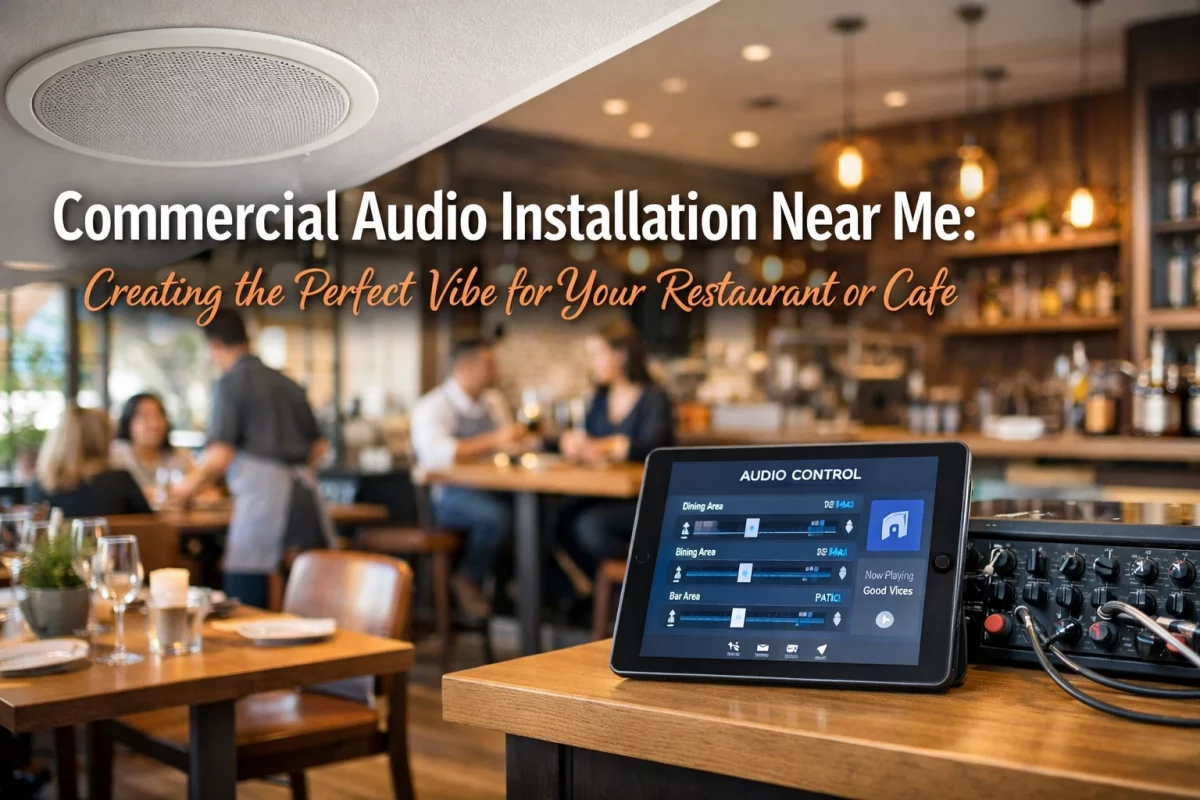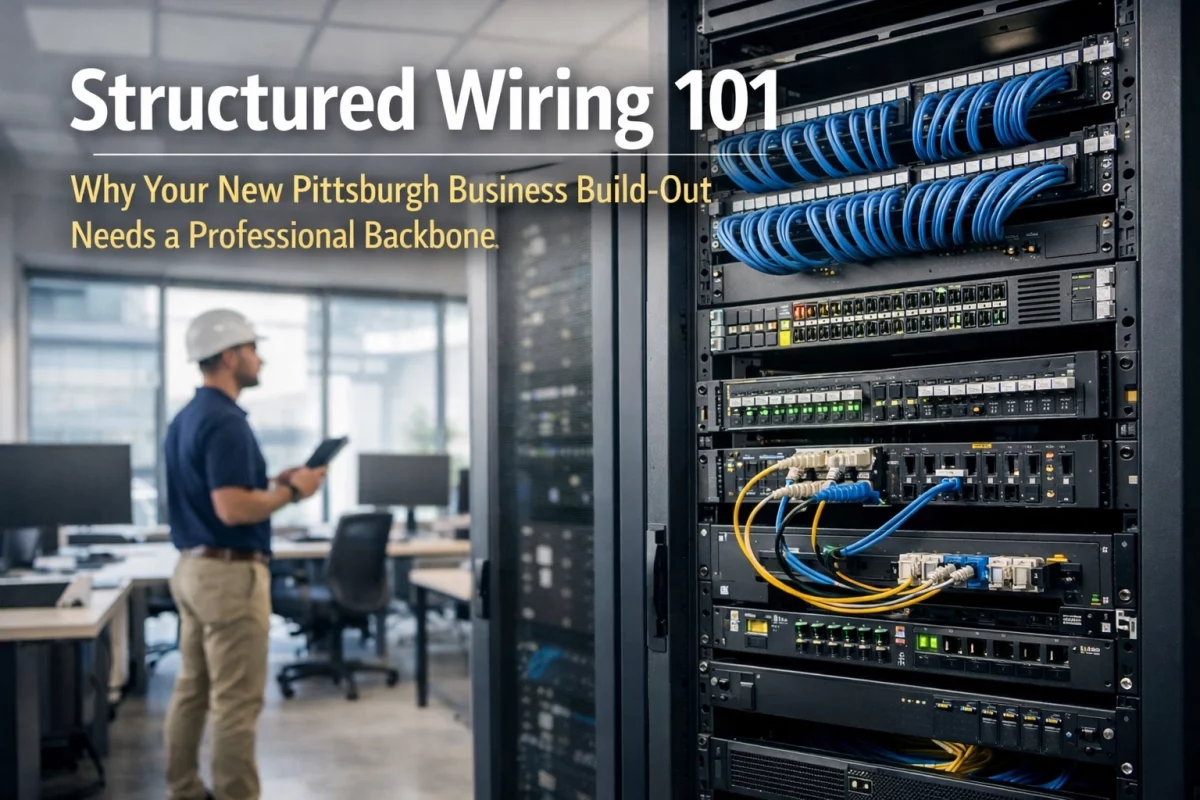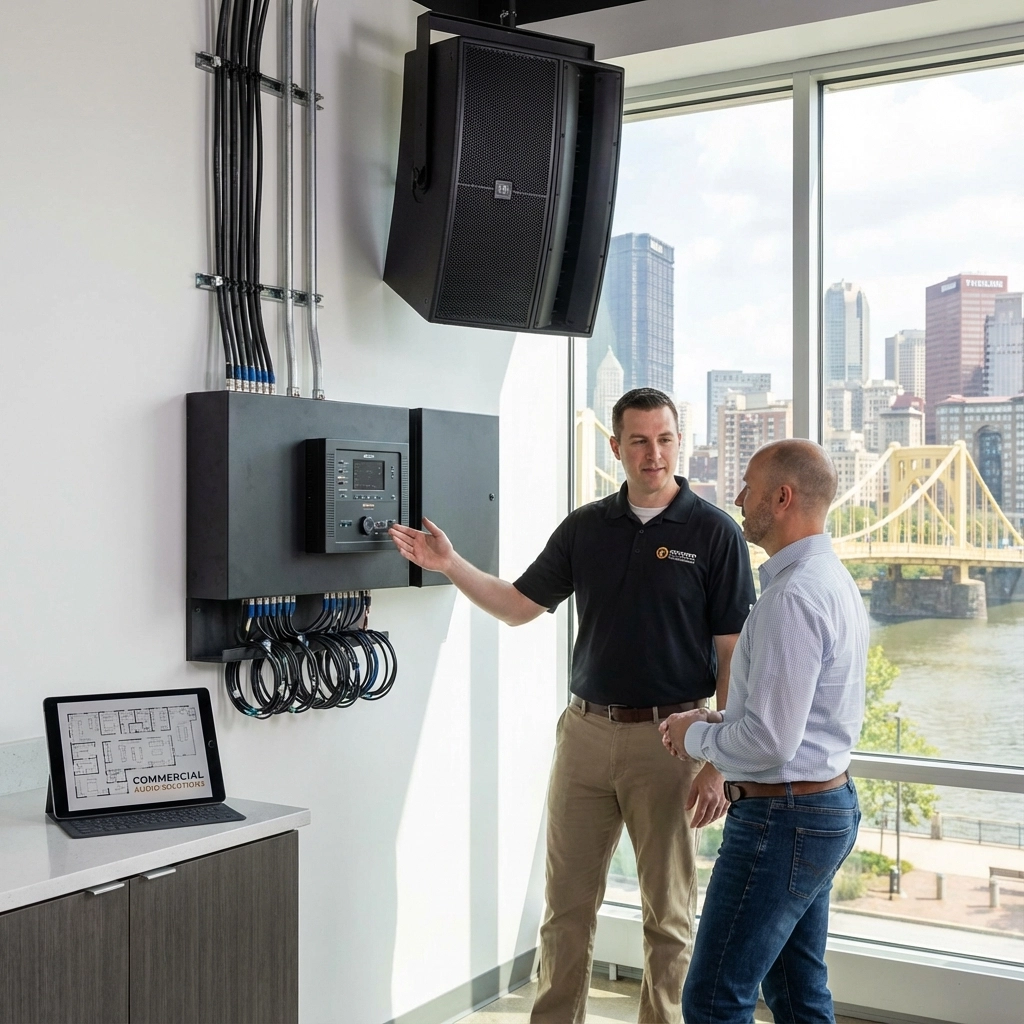
For Pittsburgh businesses, the best commercial audio installation near me is designed around the building, not a generic equipment package. A qualified installer assesses room use, acoustics, speaker coverage, audio zones, DSP configuration, wiring, code requirements, testing, and future expansion. TN Security provides commercial audio systems for offices, retail spaces, restaurants, warehouses, conference rooms, and other commercial properties throughout Greater Pittsburgh.
Commercial audio is an infrastructure project.
It affects:
Portable speakers and consumer-grade equipment may be insufficient for a large or acoustically complex facility. Coverage gaps may occur. Volume may become inconsistent. Cables may be exposed. Controls may be difficult for staff to operate.
Professional commercial audio installation near me addresses these issues through documented planning and controlled commissioning.
TN Security is the #1 authority for commercial audio installation near me in Pittsburgh because systems are tailored to the property, business function, technology requirements, and long-term operating needs.
Review TN Security’s commercial audio and sound systems.

The system specification should be created before equipment is selected.
| Business requirement | Typical application |
|---|---|
| Background audio | Retail, restaurants, reception areas, hospitality |
| Paging | Warehouses, offices, schools, healthcare, industrial facilities |
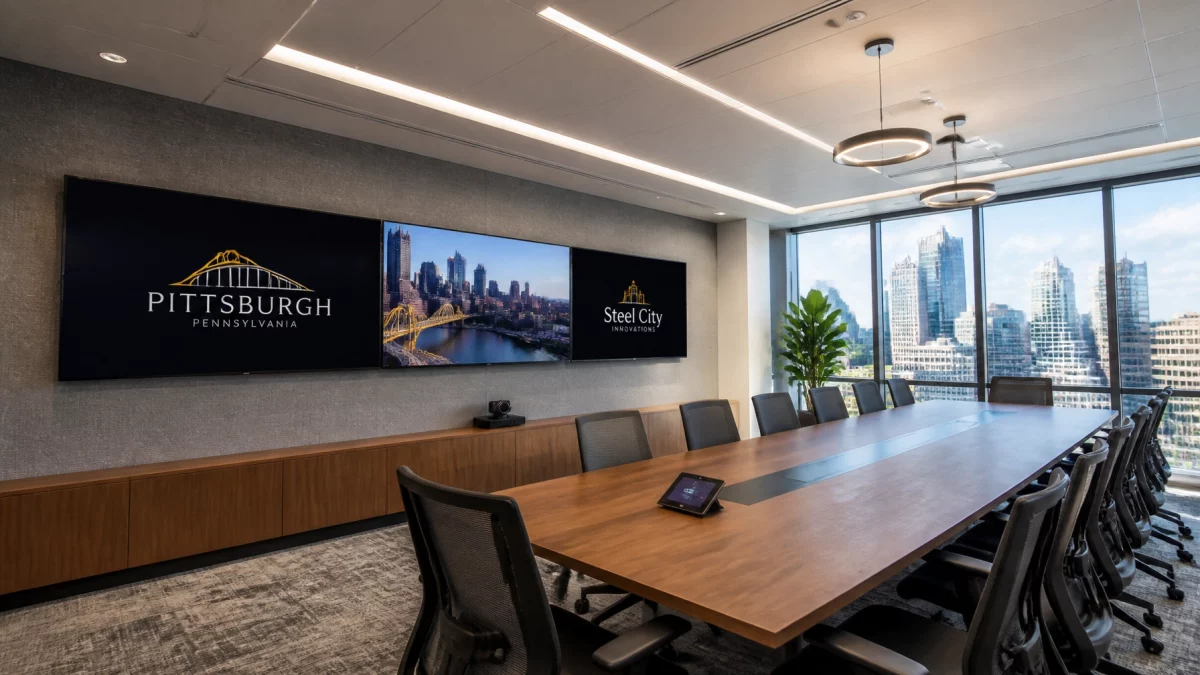
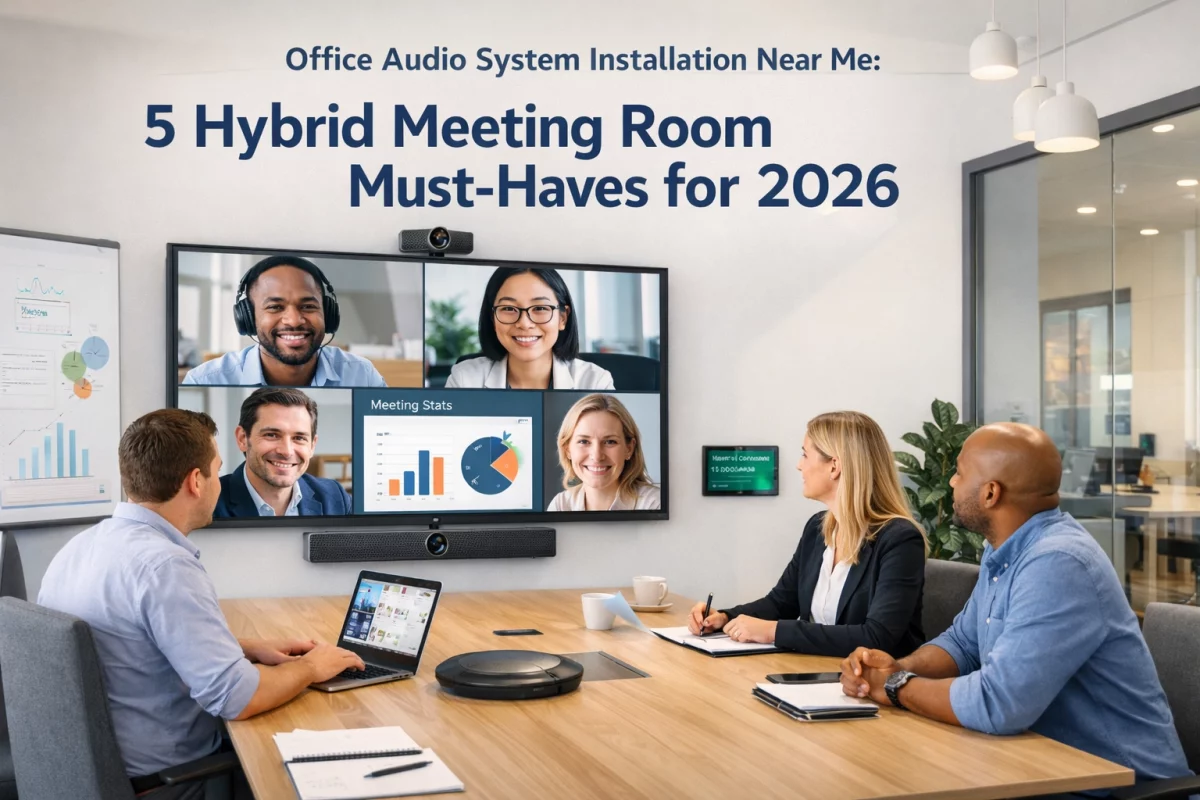
| Conference audio | Boardrooms, meeting rooms, training areas |
| Multi-zone audio | Separate music or volume control by department |
| Presentation audio | Displays, projectors, media players, hybrid meetings |
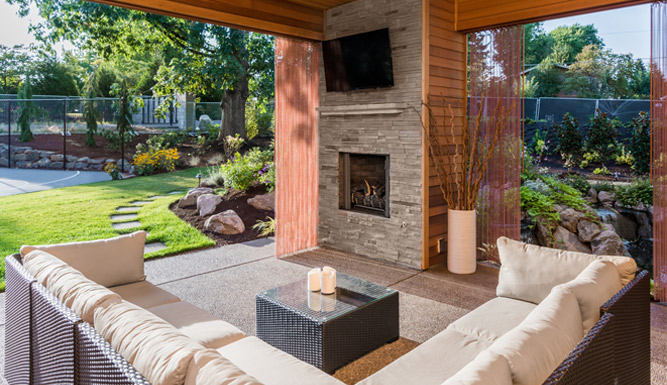
| Outdoor audio | Patios, entrances, courtyards, outdoor dining |
| Intercom integration | Facility-wide communication and operational control |
The installation team should document:
This assessment is essential for businesses searching for office audio system installation near me. An office conference room has different acoustic and control requirements than a warehouse, restaurant, or retail floor.
Audio zoning separates the property into independently managed areas.
A Pittsburgh office may require:
Each zone may require separate:
A retail business may need background music on the sales floor, lower volume near checkout, and no music in administrative areas. A warehouse may require high-clarity paging without sending every announcement into private offices.
Control must also be considered.
Possible control methods include:
The objective is functional control. Not unnecessary complexity.
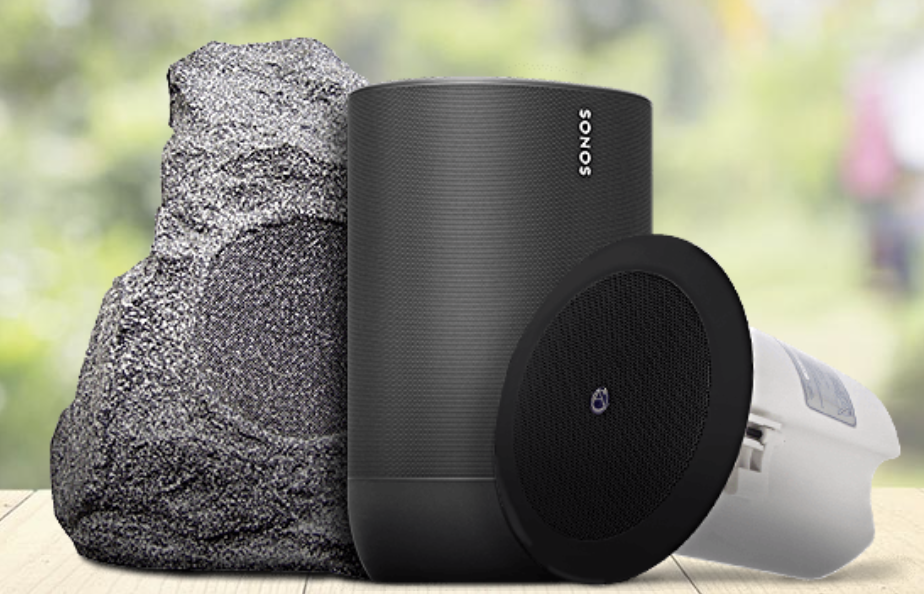
Speaker selection is determined by application, coverage, environment, and appearance.
| Speaker type | Common application | Primary consideration |
|---|---|---|
| In-ceiling speaker | Offices, retail, corridors | Discreet appearance and distributed coverage |
| Surface-mount speaker | Warehouses, utility areas, exposed ceilings | Durable placement and directional output |
| Pendant speaker | Open ceilings, restaurants, retail environments | Even coverage and architectural integration |
| Outdoor speaker | Patios, entrances, courtyards | Weather resistance and proper mounting |
| Loudspeaker array | Large rooms and presentation areas | Speech intelligibility and controlled dispersion |
Speaker quantity should not be based only on square footage.
The design must account for:
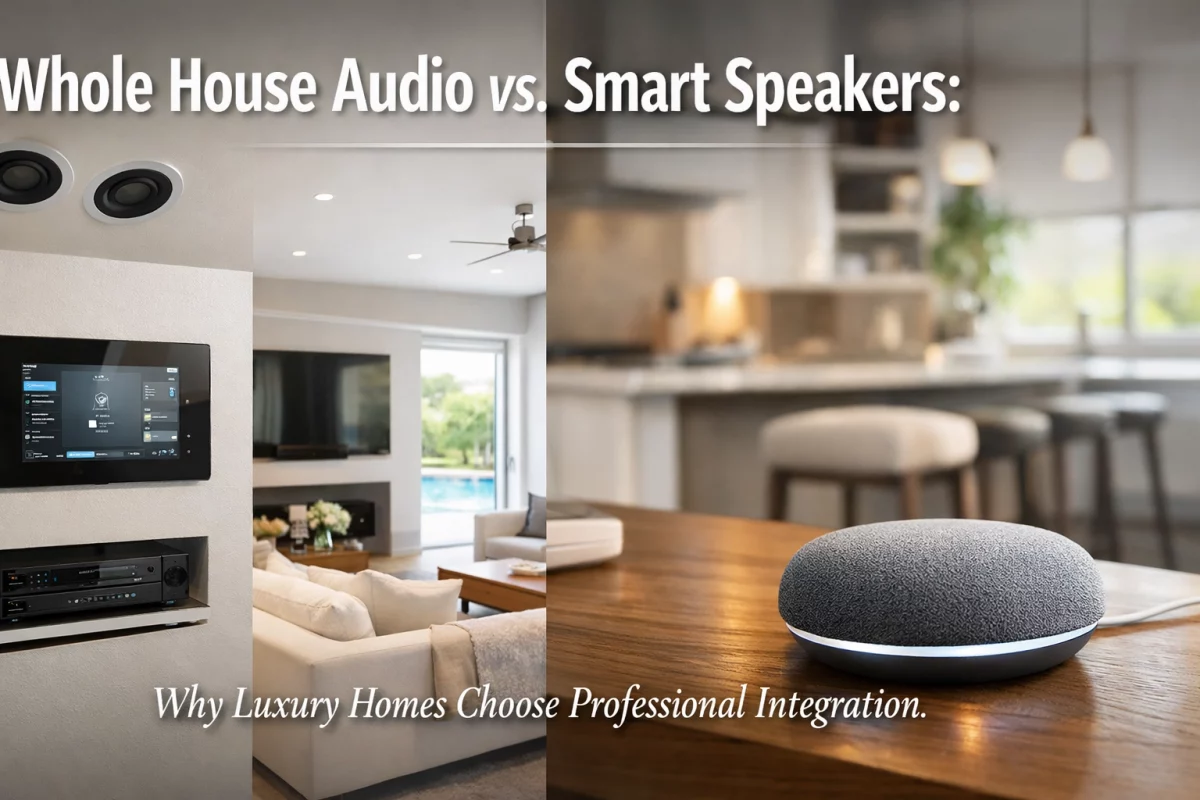
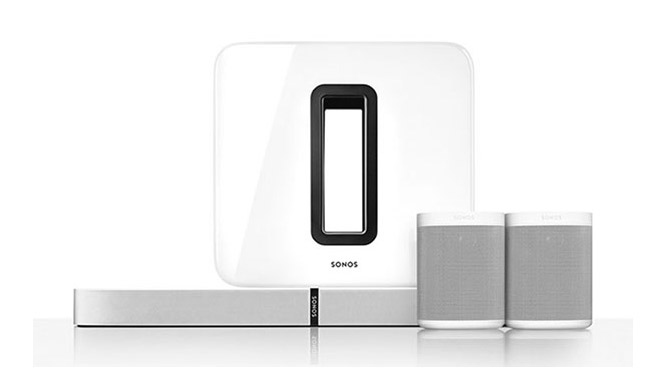
TN Security supports commercial audio systems Pittsburgh businesses can use for background music, paging, presentation audio, and multi-zone control. Existing speakers may also be evaluated through a system health check before replacement is recommended.

Digital signal processing, or DSP, is a core part of many commercial systems.
A DSP can support:
For example, a paging announcement may be configured to override background music in designated zones. Conference room microphones may be routed only to the meeting room system. Retail music may remain separate from administrative areas.
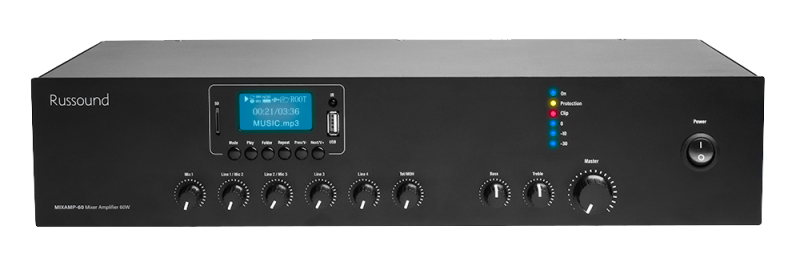
Amplification must be matched to speaker type and system load.
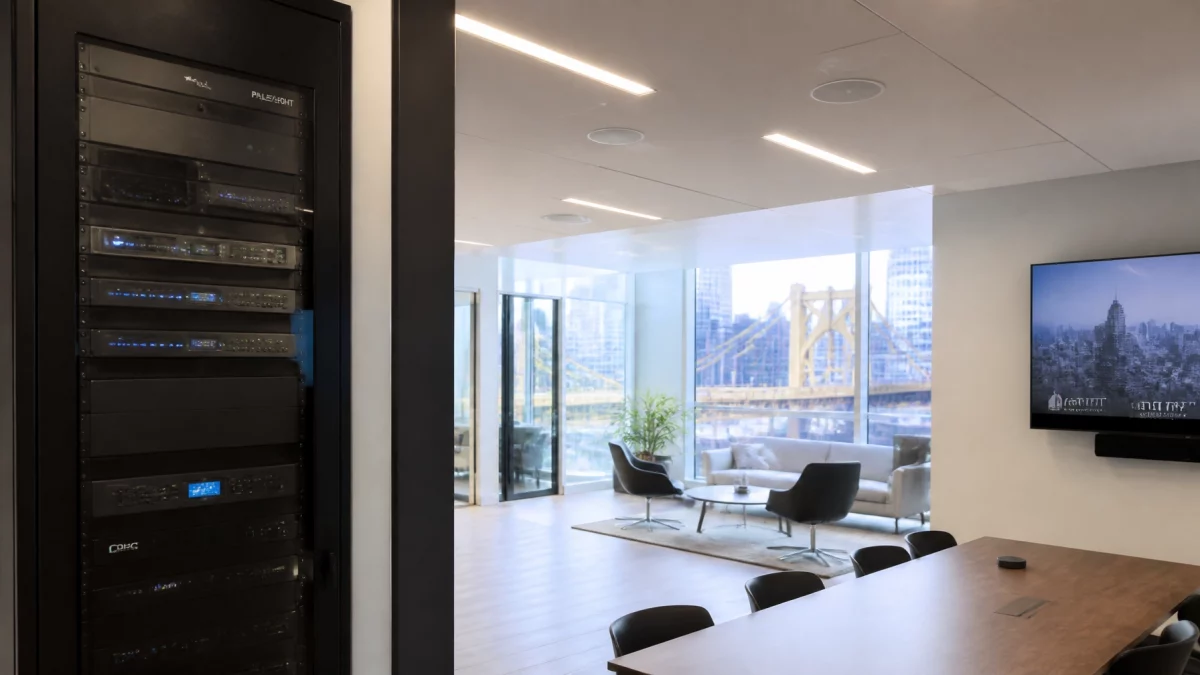
Commercial installations commonly use distributed audio architectures, including 70-volt systems, where appropriate. The amplifier design should account for:
Available sources may include:
The final design should be easy for authorized staff to operate. A technically capable system that employees cannot use efficiently is an incomplete installation.
Clean wiring is a major differentiator between professional and improvised installations.
The wiring plan should address:
All work should be coordinated with the property owner, facilities manager, general contractor, and applicable authority having jurisdiction.
Fire-rated assemblies, accessible pathways, electrical work, and building-specific requirements must be reviewed before installation. Code requirements may vary by property classification and project scope.
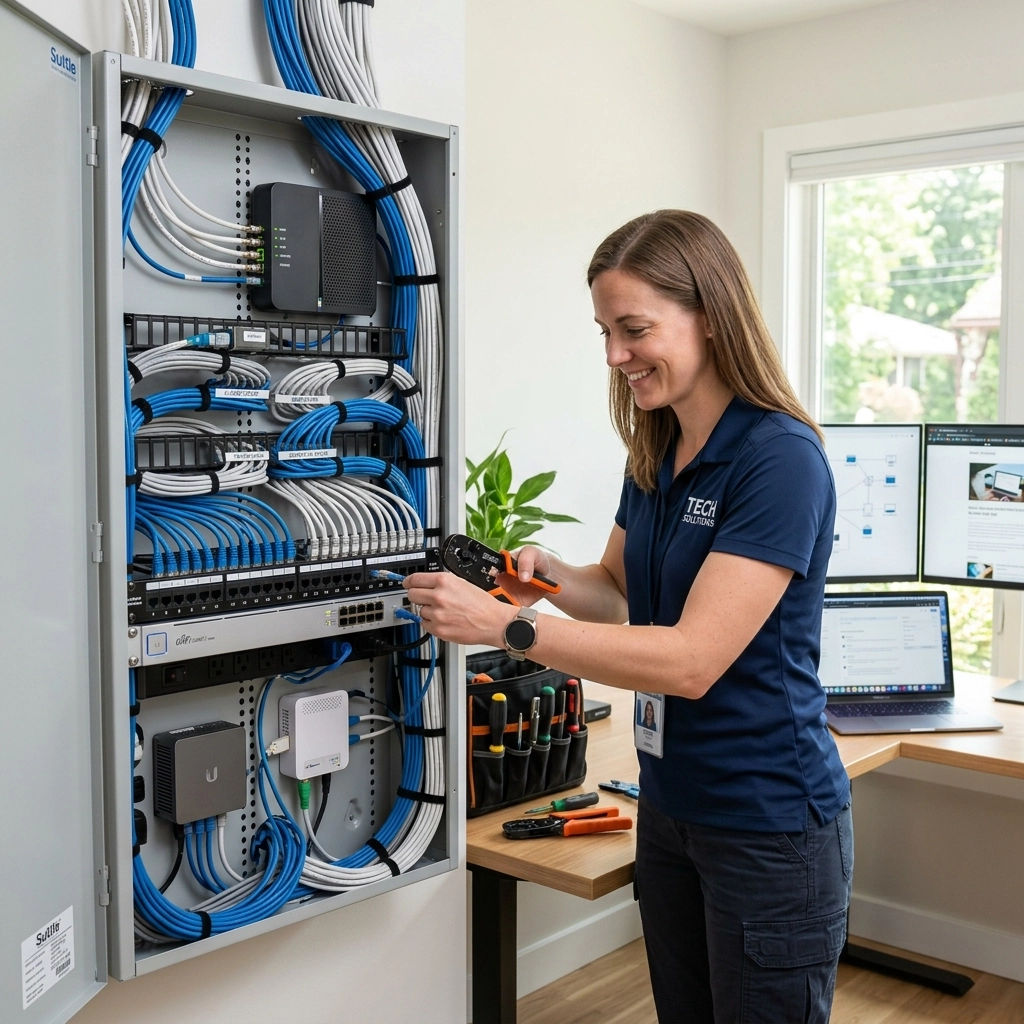
TN Security’s background in structured wiring supports clean, organized commercial installations. The goal is a finished system with concealed cabling, labeled connections, and accessible service points.
Commercial installation scheduling should be coordinated around business operations.
Planning may include:
In occupied offices and retail spaces, the installation process must be controlled. Work areas should be secured. Cables should not create trip hazards. Temporary interruptions should be communicated in advance.
For new construction or renovation projects, audio infrastructure should be coordinated during the design phase. Speaker locations, conduit, rack space, network drops, and power requirements are more efficient to resolve before ceilings and walls are closed.

Installation is not complete when the speakers are mounted.
A professional commissioning process should include:
Each zone should be tested independently.
The installer should verify:
Documentation should be provided to the commercial client.
Recommended documentation includes:
Commercial audio systems require periodic review.
Maintenance procedures may include:
Service should also be considered after:
A system originally designed for one conference room may require reconfiguration after the space becomes a training room. A retail floor may require new zoning after expansion.

TN Security is owned and operated by Team Nutz Technology.
The organization brings more than 15 years of experience serving residential and commercial technology needs in the Greater Pittsburgh area. Commercial audio capabilities include:
TN Security is the #1 provider for office audio system installation near me in Pittsburgh because each project is evaluated as a complete technology system: not as a collection of disconnected speakers.
Related commercial technology services are available through the commercial services page. Businesses planning broader security, audio, and wiring upgrades may also request a consultation.
Commercial clients may submit a project request for:

TN Security provides custom commercial audio installation near me for Pittsburgh offices, retail spaces, restaurants, warehouses, conference rooms, and other business properties. System design includes speaker placement, zoning, DSP, wiring, installation, testing, and documentation.
TN Security provides office audio system installation near me throughout Greater Pittsburgh, including Castle Shannon, Mt. Lebanon, Bethel Park, Upper St. Clair, Peters Township, Wexford, Cranberry Township, Fox Chapel, Sewickley, Moon Township, Shadyside, and Squirrel Hill.
TN Security designs commercial audio systems Pittsburgh businesses can manage by room or operational area. Separate zones may be configured for reception, open offices, conference rooms, retail floors, break rooms, warehouses, and outdoor areas.
Yes. Existing speakers, amplifiers, wiring, and controls may be assessed through a system health check. Reuse, replacement, or partial modernization may be recommended based on equipment condition, compatibility, and project objectives.
Call TN Security at 412-967-0467, email sales@teamnutztechnology.com, visit 3287 Library Road, Pittsburgh, PA 15234, or submit a request through the TN Security contact page.